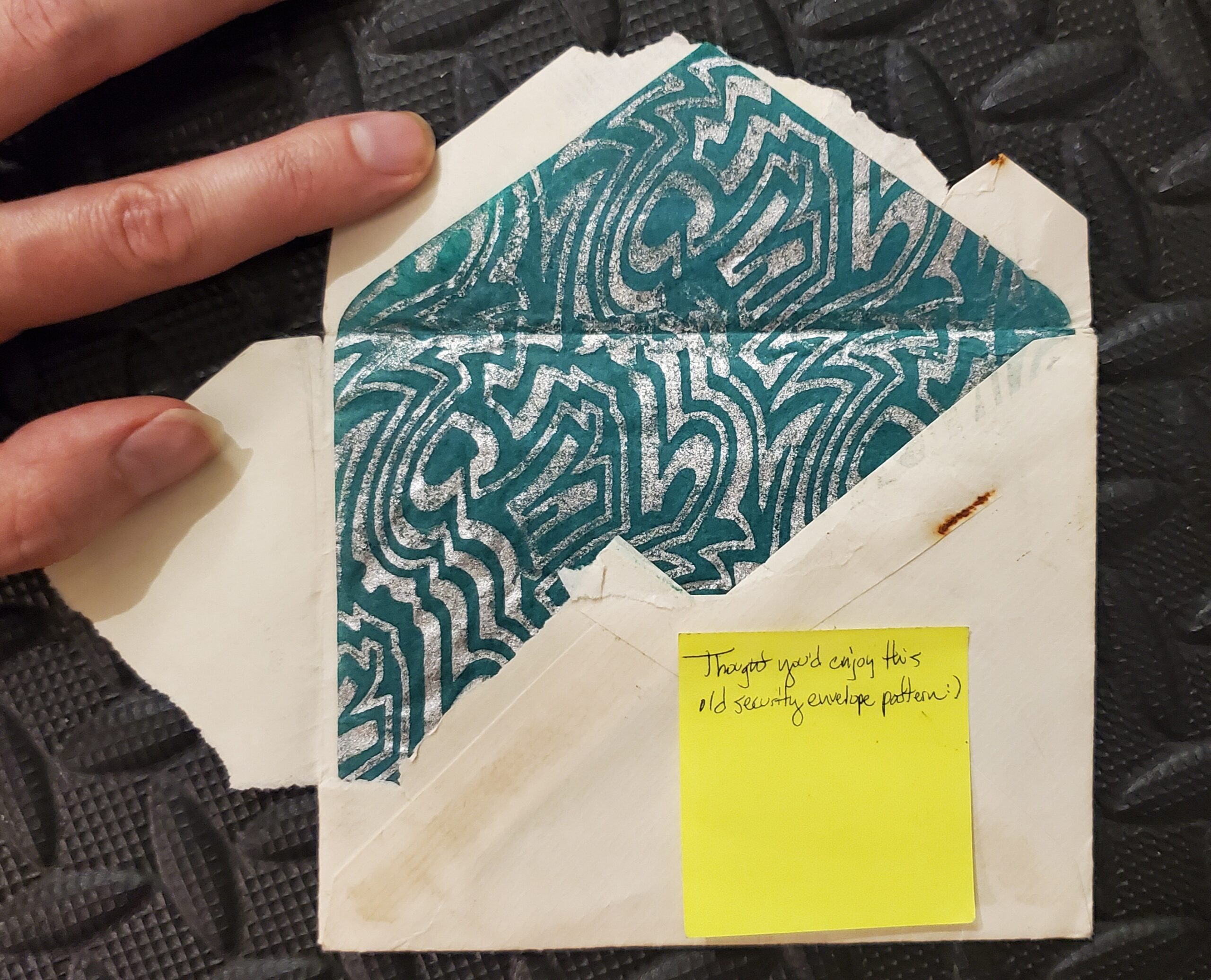
A huge thank you to my friend, musician Kate Frost, for sending me this one. This has to be the most unique and interesting piece in my entire collection.
Pattern Description
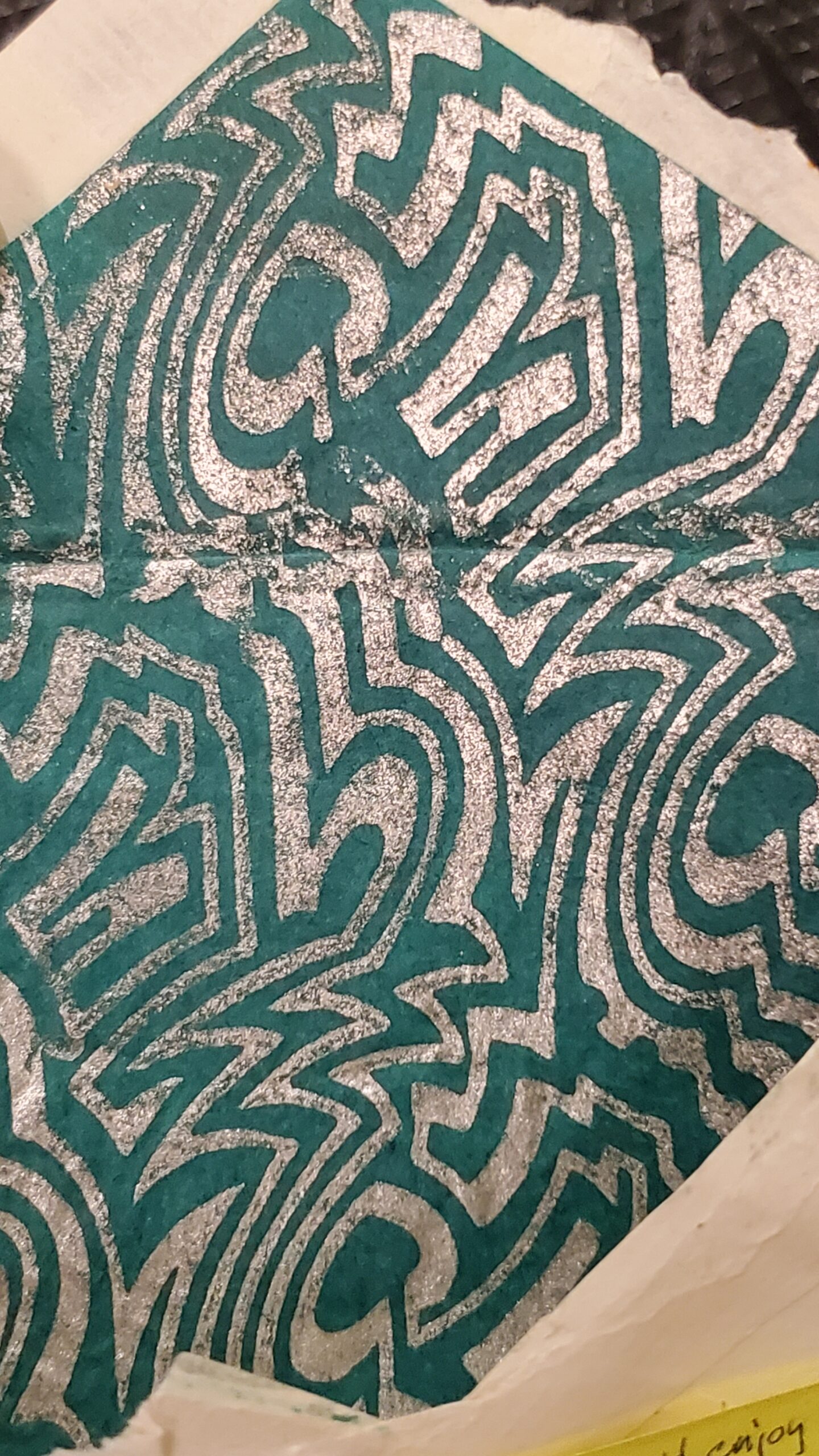
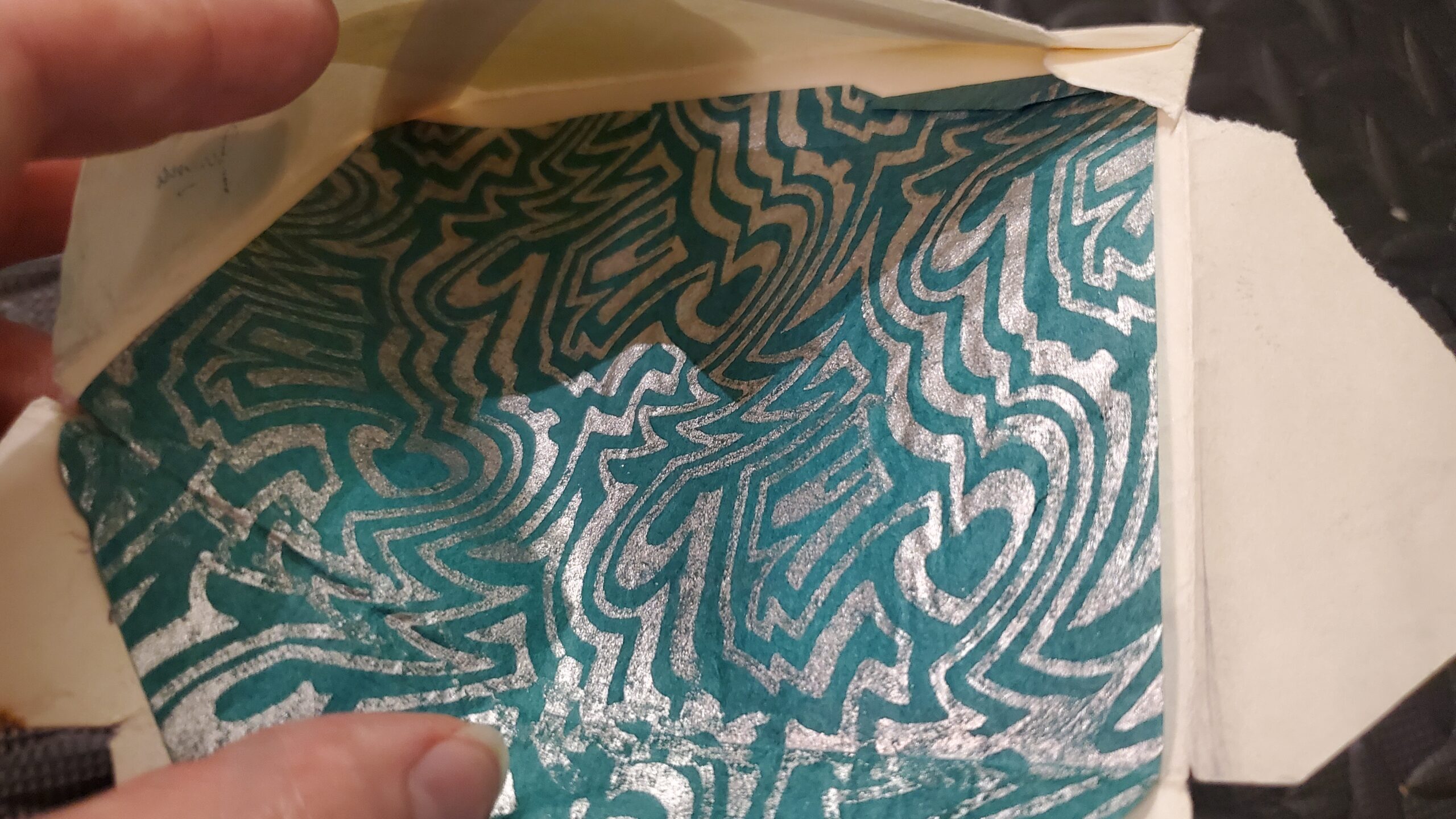
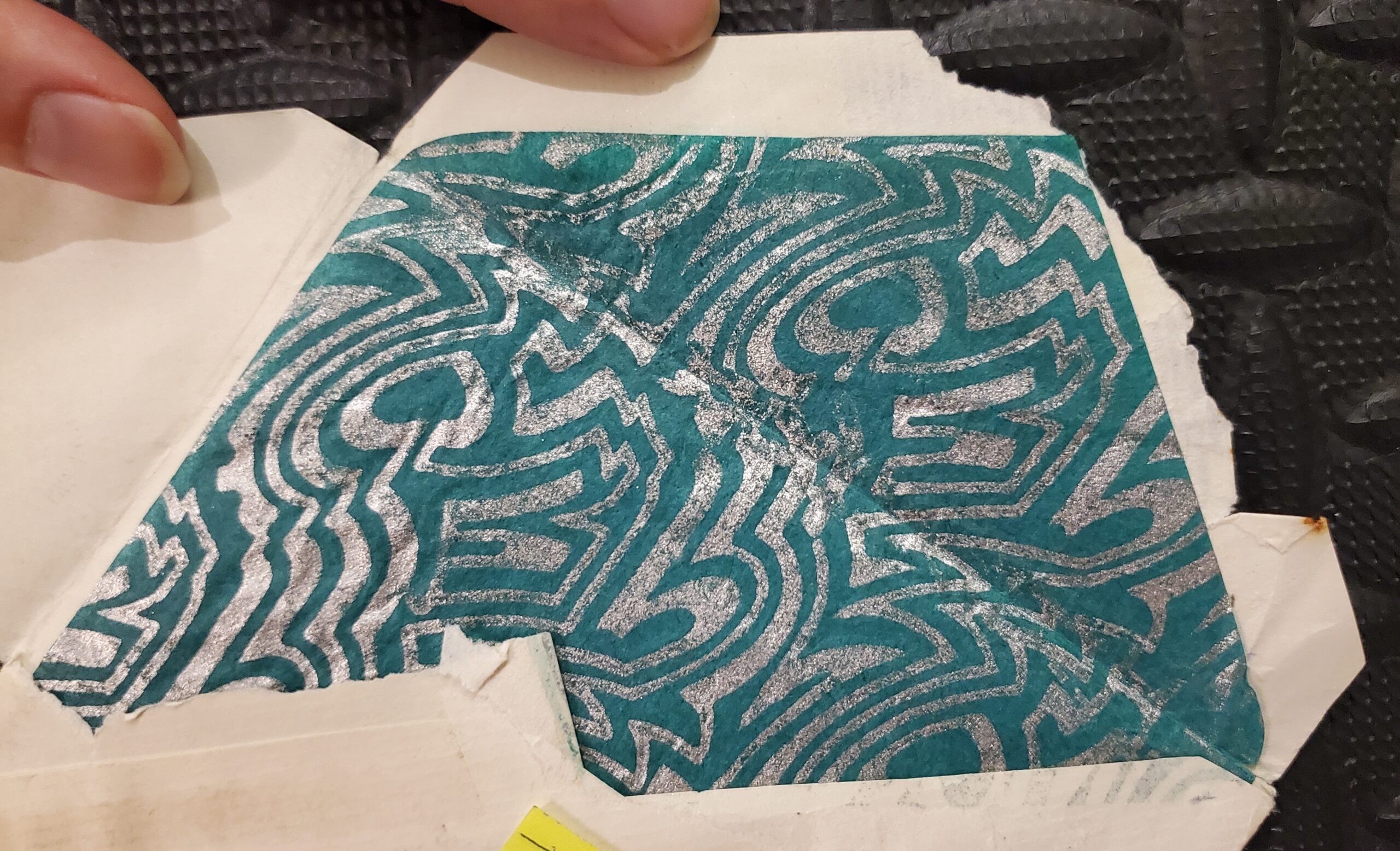
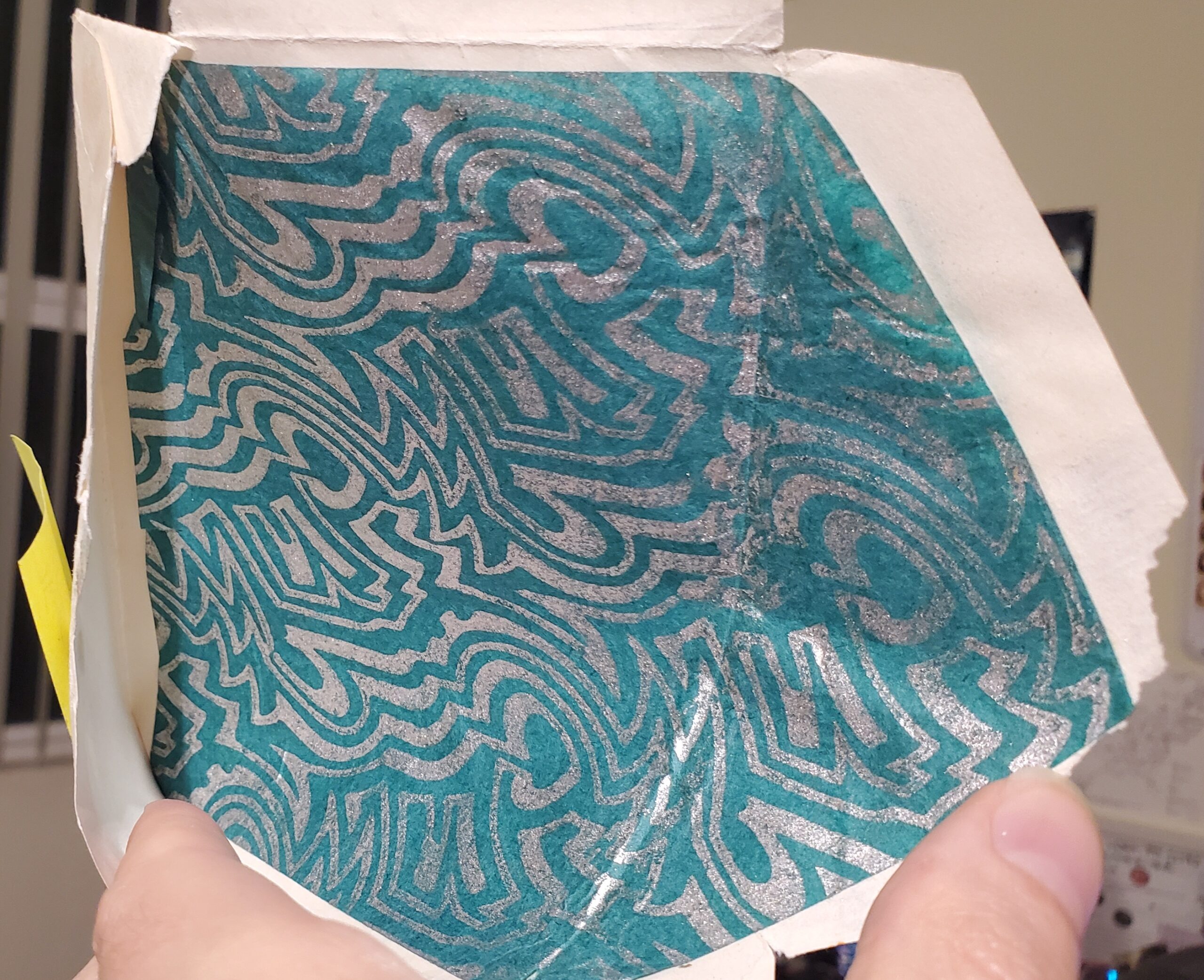
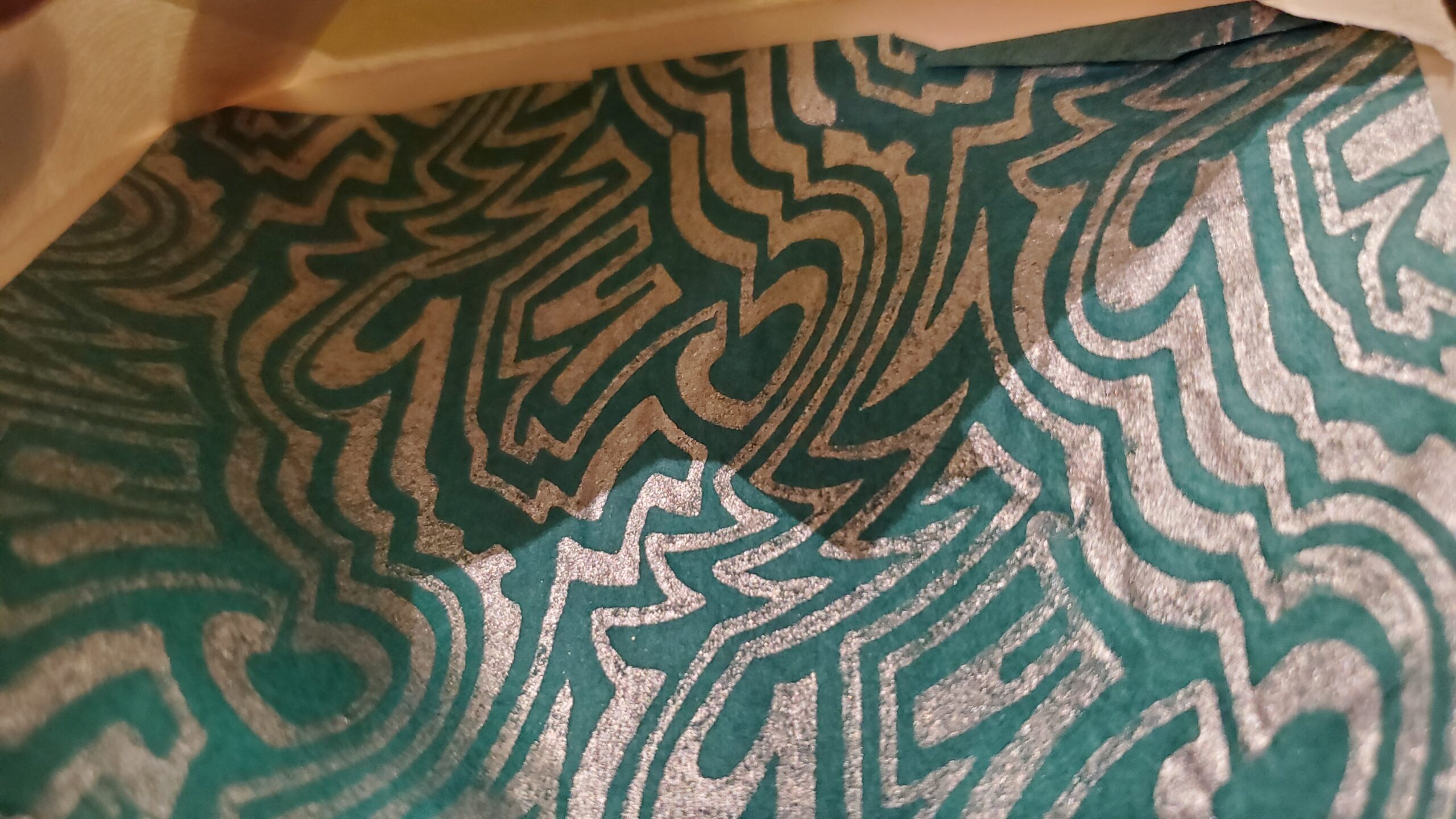
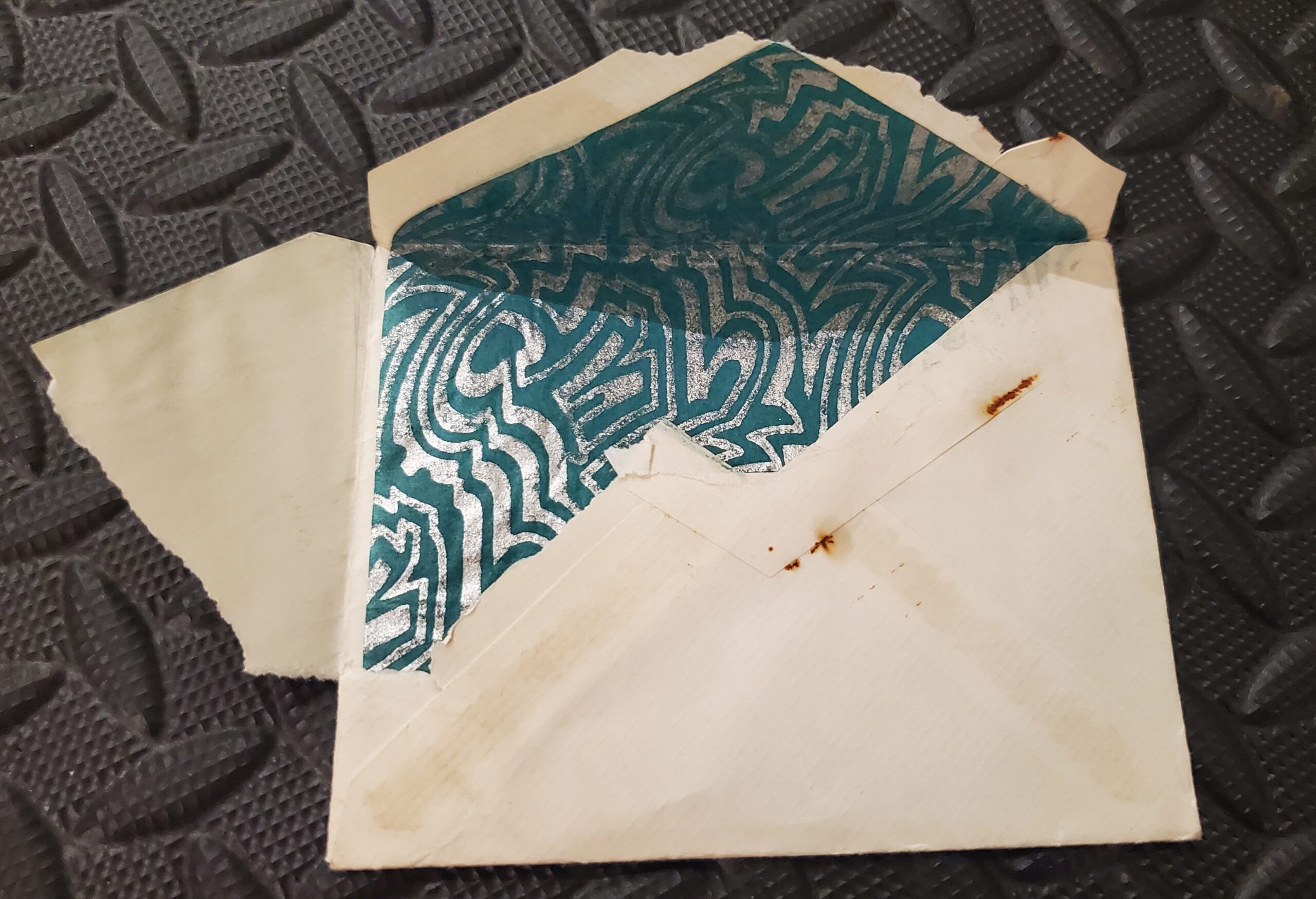
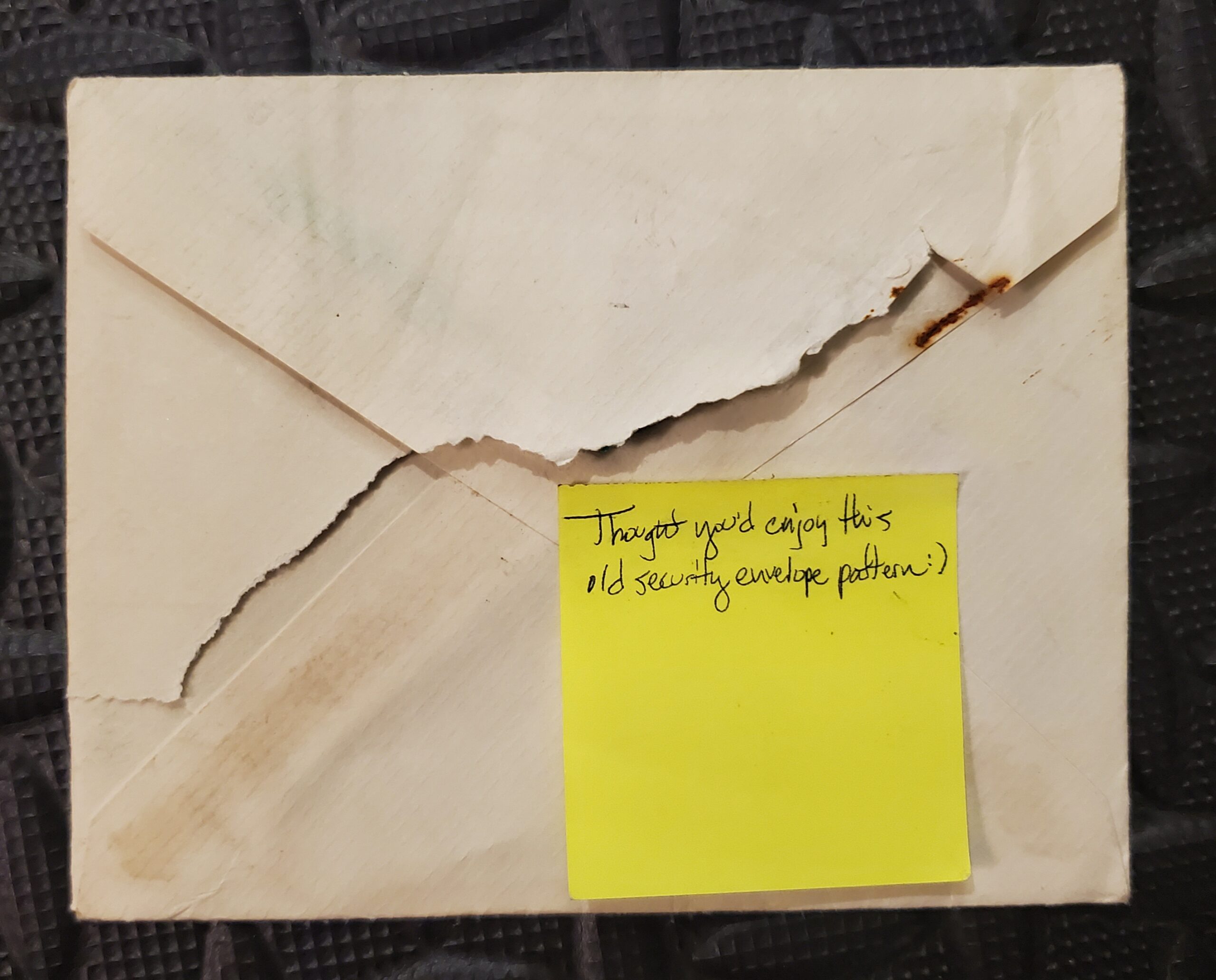
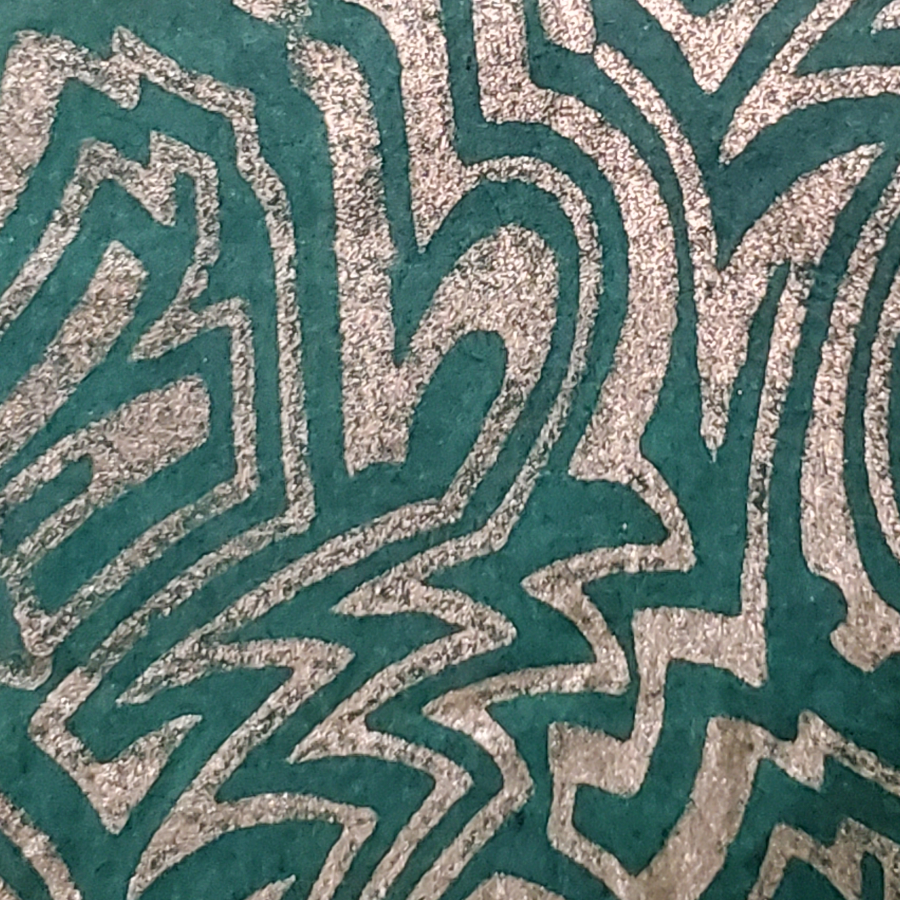
This one is worked in metallic silver over a rich teal-green ground, and unlike most patterns in this collection it isn’t printed directly onto the envelope stock. It’s on a separate sheet of thin, almost tissue-like foil paper, glued in place at the flap and the panel just beneath it, so the pattern sits as its own applied layer rather than part of the envelope itself.
The design is a dense tangle of jagged, hand-drawn-looking lines that zigzag and coil back on themselves, closer to lightning bolts and looping ribbon than any straight geometric repeat. There’s an excited sense of movement running through it, almost like frozen static or a scribbled maze, with the silver catching light unevenly across the surface depending on how the tissue paper has creased and folded over the decades and how it hits the light.
The jagged, syncopated rhythm of the linework and that metallic-with-color combination place it comfortably within the visual world of Jazz Age and Art Deco design, when angular, energetic patterning like this showed up everywhere from wallpaper to fabric to packaging.
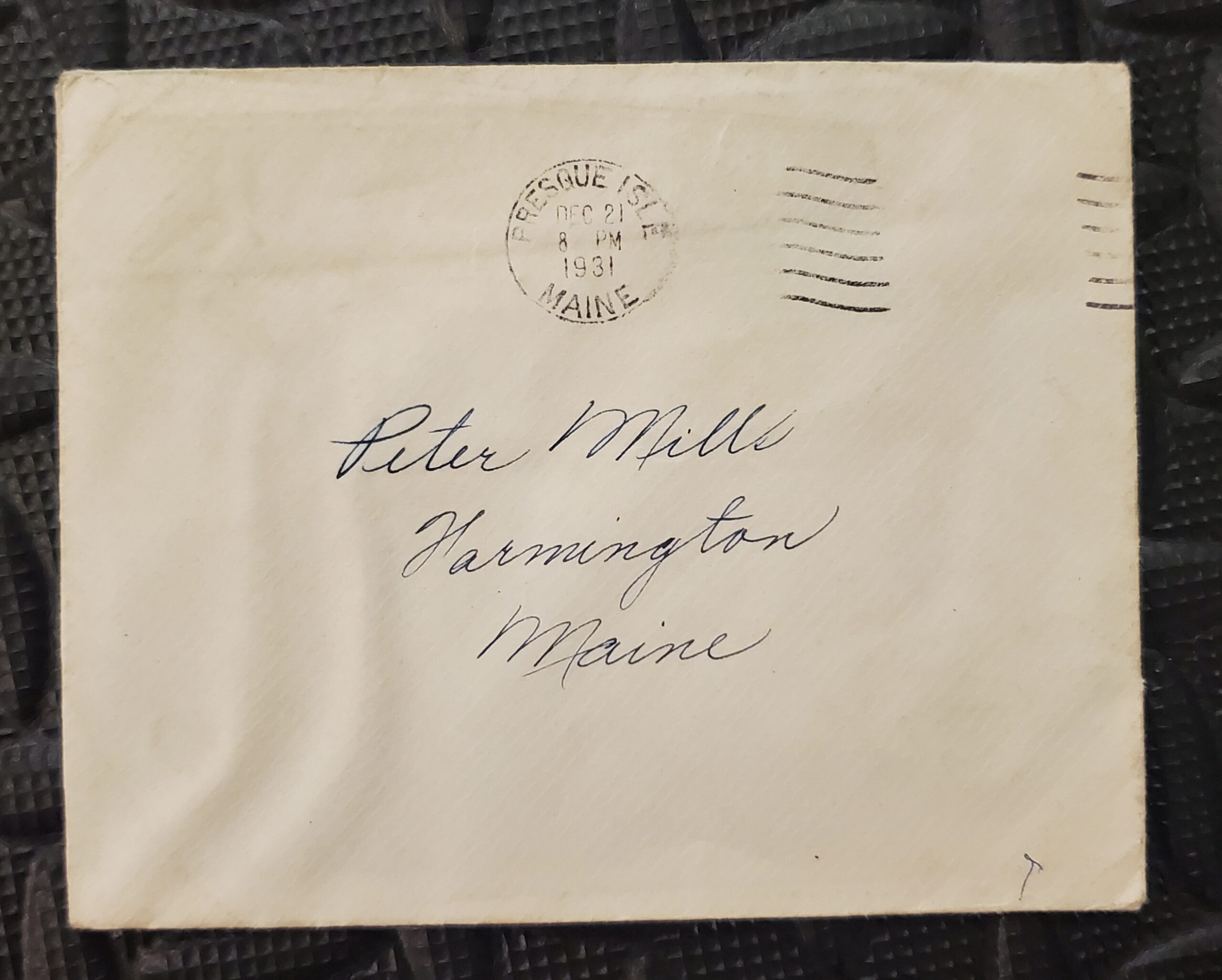
The envelope itself carries a Presque Isle, Maine postmark dated precisely 8:00 PM December 21, 1931, addressed to a Peter Mills in Farmington, which makes this one of the older and more historically grounded pieces in the whole collection.
The lack of address, but presence of the postage marks around where the stamp clearly was, suggests that it was mailed within a community small enough where everyone knew each other. And of course, there is no zip code on the envelope, because zip codes weren’t introduced until July 1st, 1963.
Presque Isle sits near the very northeast tip of the state of Maine, very close to New Brunswick, Canada. In the 1930 census, Presque Isle’s population was 6,965 people. (Even as of 2020, Presque Isle’s population is only 8,797 people.)
Between the age, the unusual tissue-paper construction, and the sheer liveliness of the pattern, this is a real standout, a genuine artifact of its era doing double duty as security (or really, decorative) printing and as a small piece of period design history.
Photo Gallery